
This week’s reader question comes from BlackSwordOfElric in Bakersfield, CA:
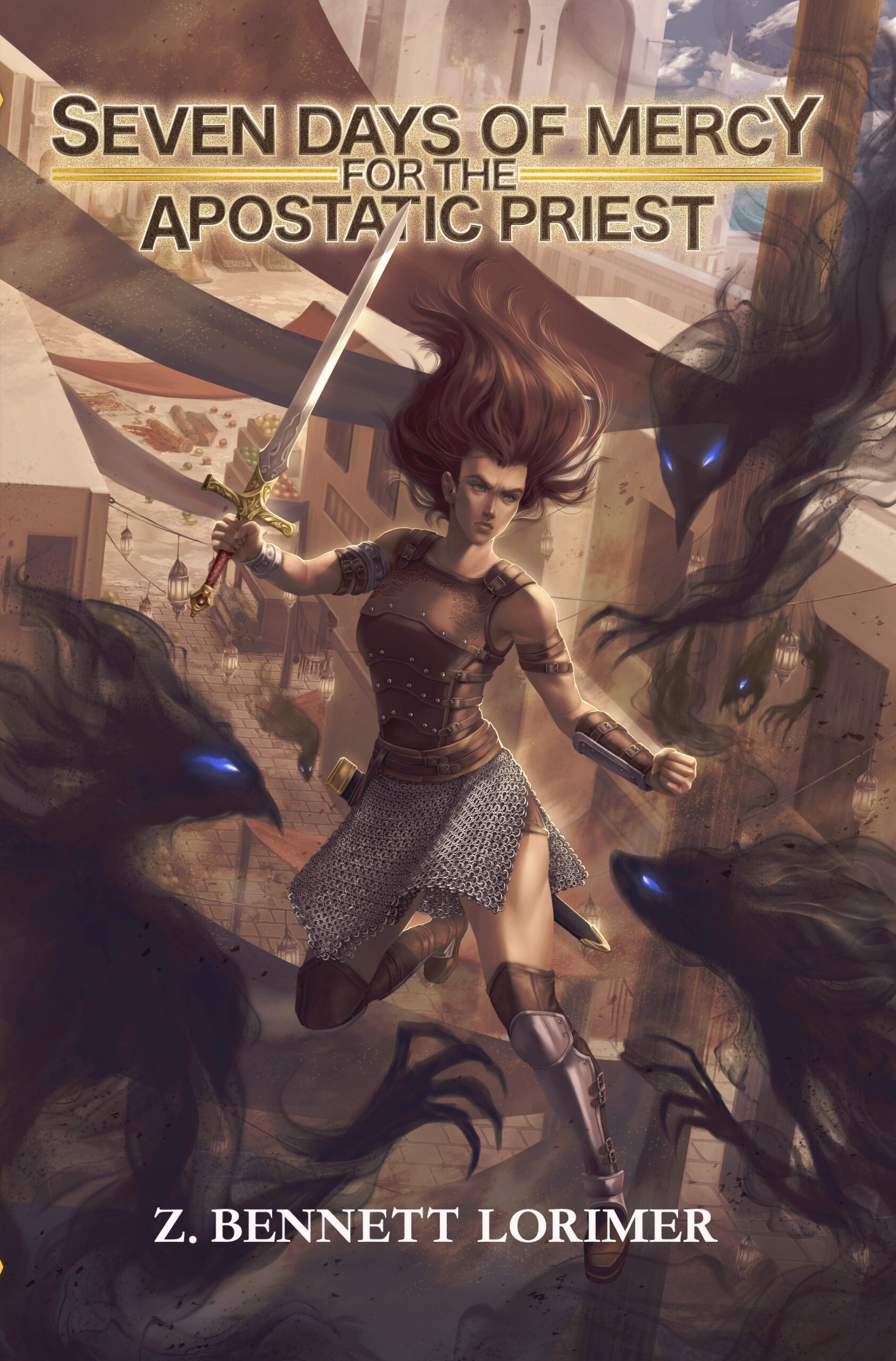
What separates sword and sorcery for me from epic fantasy is a lack of inner monologue and a focus on showing instead of telling. [Seven Days of Mercy for the Apostatic Priest] feels more like straight epic fantasy to me.
More of an observation from BlackSwordOfElric, but I think there is an implied question that I can try to tackle–What makes Seven Days of Mercy for the Apostatic Priest a sword and sorcery novel?
Genre analysis is a squishy business, and “sword and sorcery” is particularly poorly described. As a form, it actually predates modern epic fantasy, but the two share so much aesthetic DNA that the more dominant contemporary category has grown to consume S&S. In 2025, sword and sorcery has become more of an aesthetic or mood of epic fantasy than a unique genre all its own. It’s also lain somewhat fallow in recent years. We’ve got a few authors attempting new stories in this mode–most notably the late Howard Andrew Jones–but the S&S shelves are still dominated by some familiar faces: Conan, Elric, and Red Sonja.
There’s an argument to be made that sword and sorcery should be written in the third-person limited with very little focus on the protagonist’s interiority. That’s certainly how Robert Howard and Michael Moorcock were writing. If their shared literary approach is the defining feature of S&S for you, then The Divine Heretic won’t seem like a fit. Seven Days of Mercy for the Apostatic Priest is written entirely in the first-person from the protagonist’s POV. While the story has plenty of Iron Age action, it also includes quite a bit of character work and interiority.
I’d make the argument that the action-focused, third-person writing is more a hallmark of the pulp era in general than sword and sorcery specifically, and in the contemporary market, a lack of interiority tends to indicate flat, lifeless writing–with good reason. As speculative fiction has matured, the greater genre has moved toward more character-driven stories. Purists may disagree, but I think you can write a character-driven sword and sorcery novel.
So what makes The Divine Heretic S&S if it doesn’t hew toward the style of the writers who created the genre? I would argue it’s the Iron Age milieu and a plot driven by the agency of a singular, deific hero. Ruxindra’s voice may not resemble Conan’s, but her character is very much built inside this archetype, and the world of Hebdomar will certainly recall the Hyborian Age or the Young Kingdoms more than Westeros or Randland. I also think S&S tends to have more moral clarity than modern epic fantasy. Sure, many iterations of Conan and Elric could be described as antiheroes, but it’s still pretty clear who you should be rooting for.
I see some readers who place notable military fantasists in the S&S lineage–writers like Glen Cook and Steve Erikson. I think it’s apt to point out some of the aesthetic similarities between, say, The Black Company and Savage Sword of Conan, but The Black Company and Malazan: Book of the Fallen are both ensemble works without a clear protagonist. IMHO, that’s the bigger deviation than a protagonist with a rich interior life. The aperture is way too wide for either of these works to be considered true S&S.
If you would like to submit a question to be printed and answered (anonymously or otherwise), simply send your question to [email protected]. No question is off limits!